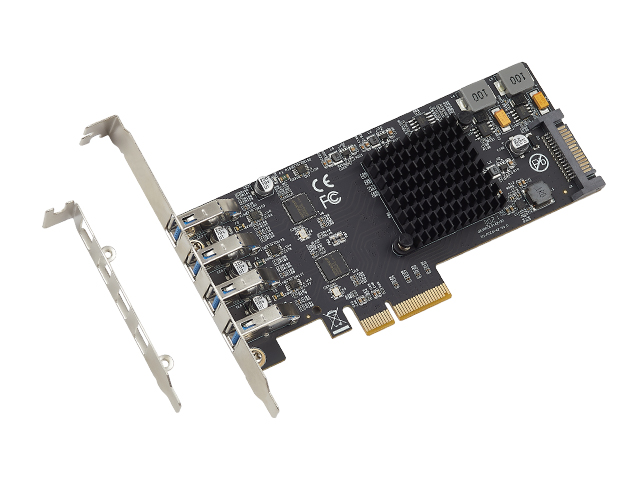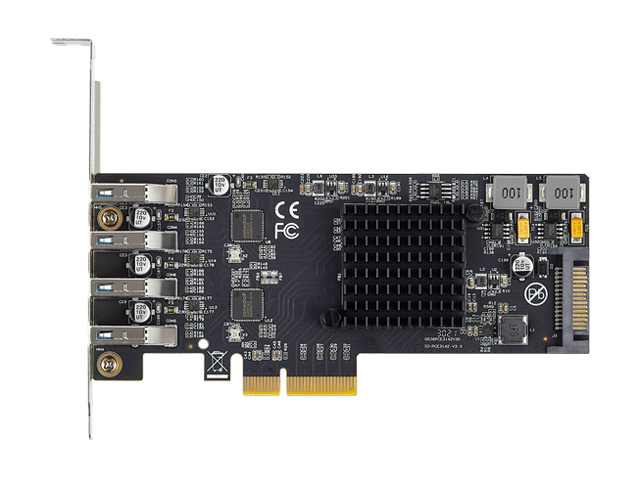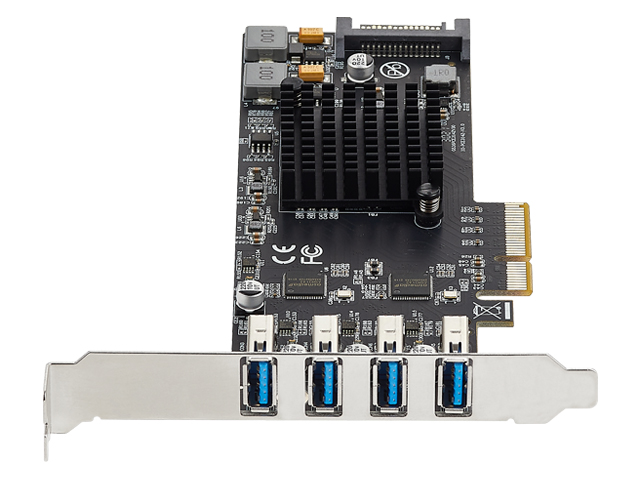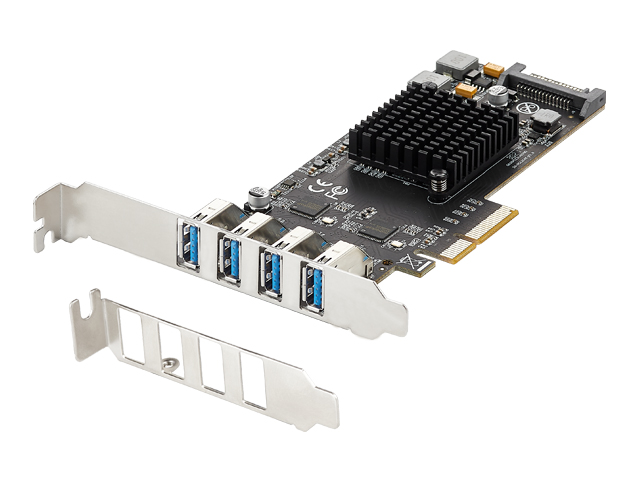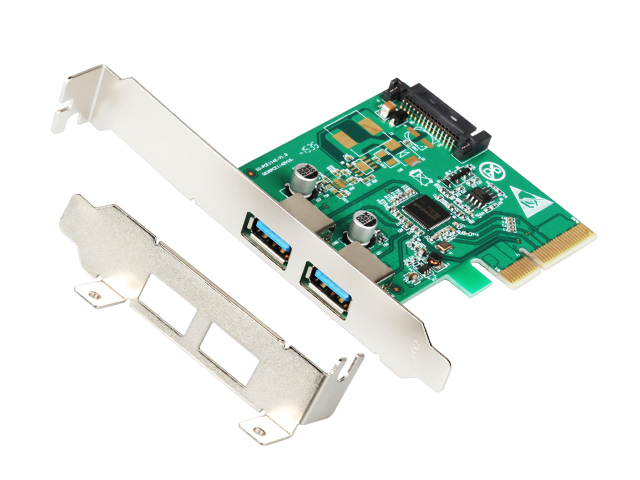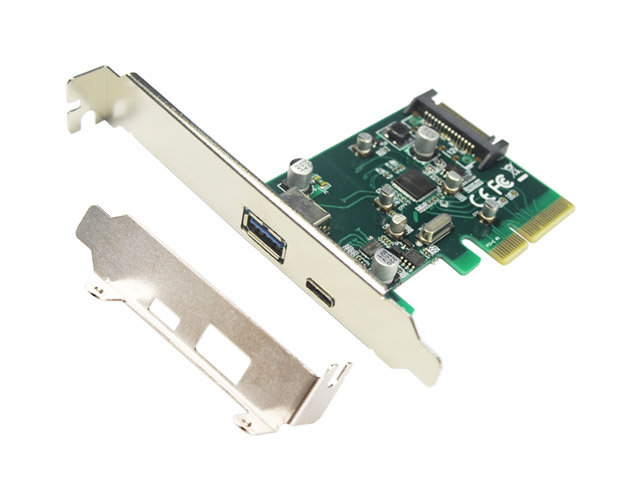



Features
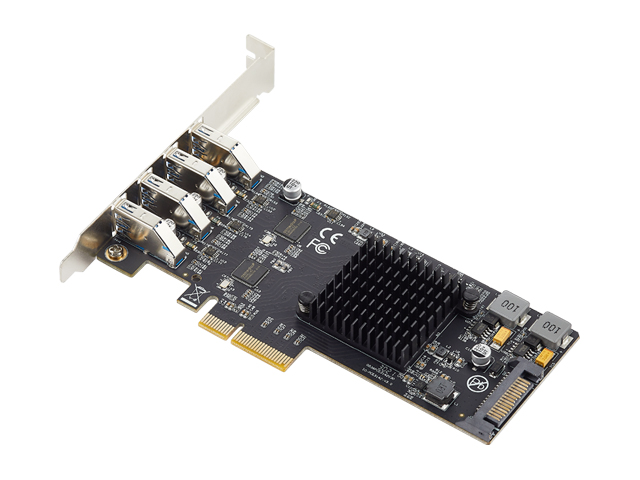
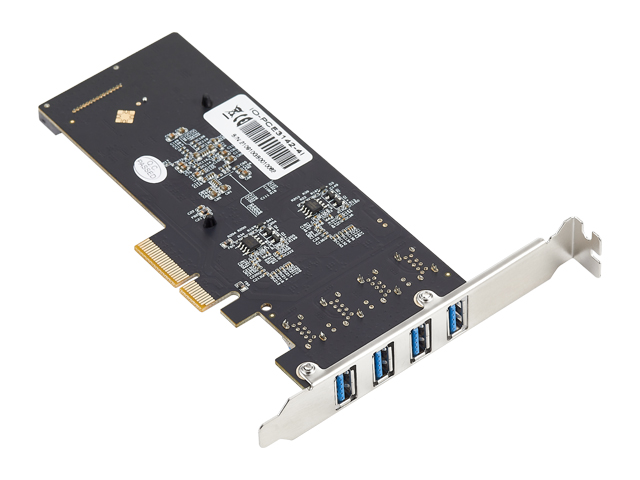
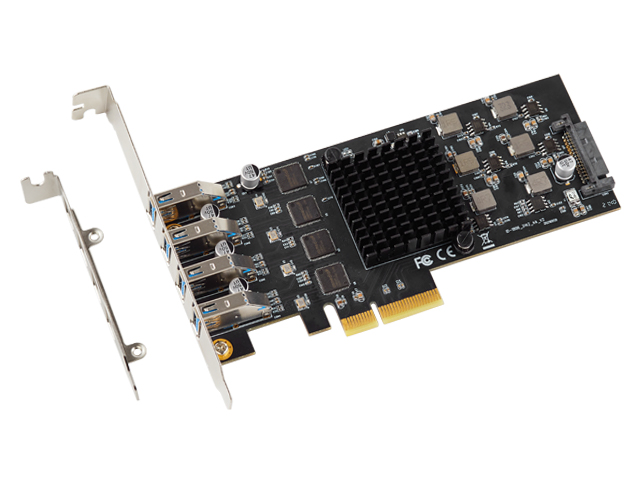
• Provides four independent USB 3.2 Gen2 ports with a total bandwidth of 40Gbps
• Up to 10Gbps transfer rate per USB 3.2Gen2 interface
• It is a industrial level high performance USB card
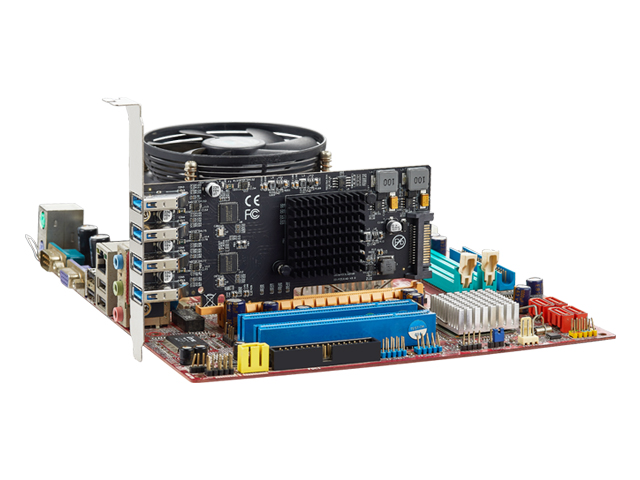
• Support PCI Express Gen-III x4
• Supports x4, x8, x16 (lane) PCI Express Bus connector keys.
• Compliant with Universal Serial Bus 3.1 specification Gen2
• Compliant with USB Attached SCSI Protocol Revision 1.0
• Compliant with xHCI (eXtensible Host Controller Interface) specifications Revision 1.1
• Compliant with Universal Serial Bus 3.1 Specification Revisionv2.0/1.0
• Supports USB data transfer rate of 10G/5G/480/12/1.5 Mbps
• 5V/900mA power output for Type A port
• Power Input: 15-pin SATA CD-ROM Type Power Connector
• Built-in over current protection on each USB port
• Support device remote wakeup function from USB keyboard or mouse
• Support Control, Bulk, Stream, Interrupt, Isochronous transfer type
• Operation Temperature :0 to 125°C
• PCIEX4design,compatible with PCIEX4,X8X16 slot.
System Requirements
• Windows 8.x / 10 (X86/X64) (Windows in-box driver)
• Linux 2.6.31 or later (Linux OS already implemented USB3.0 driver)
Package Contents
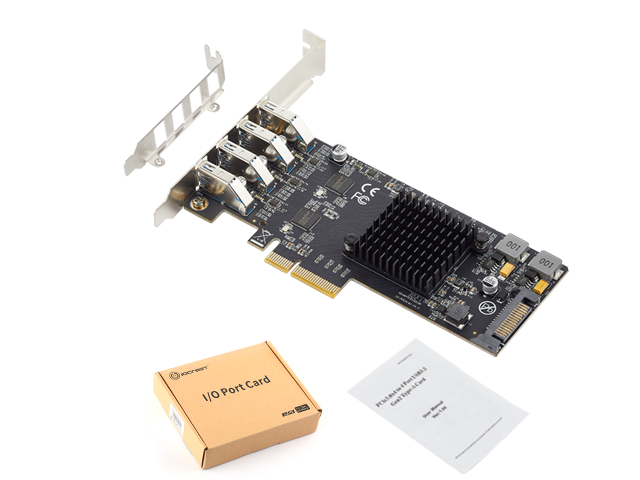
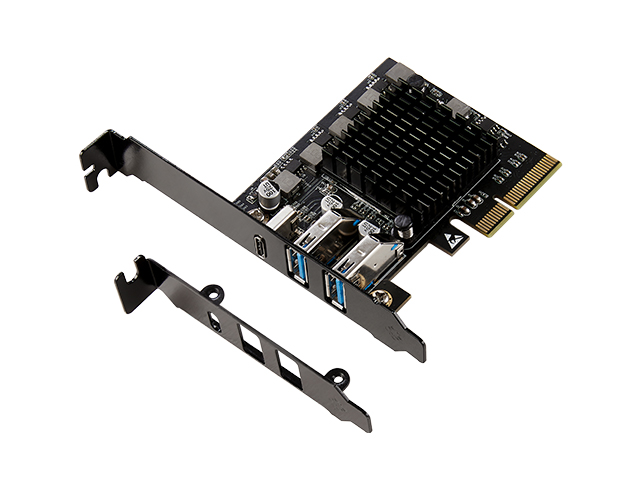
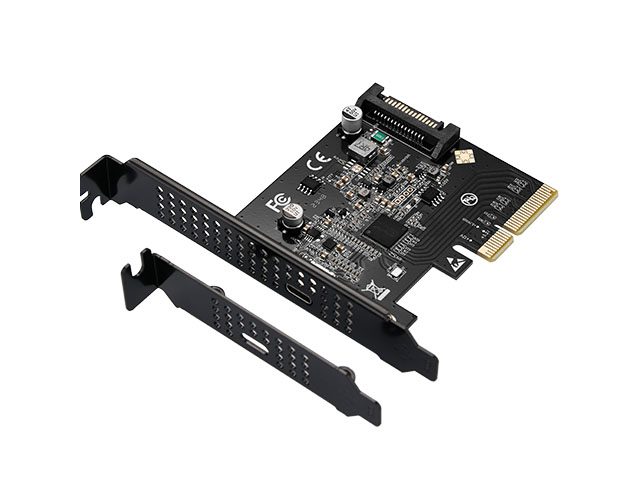
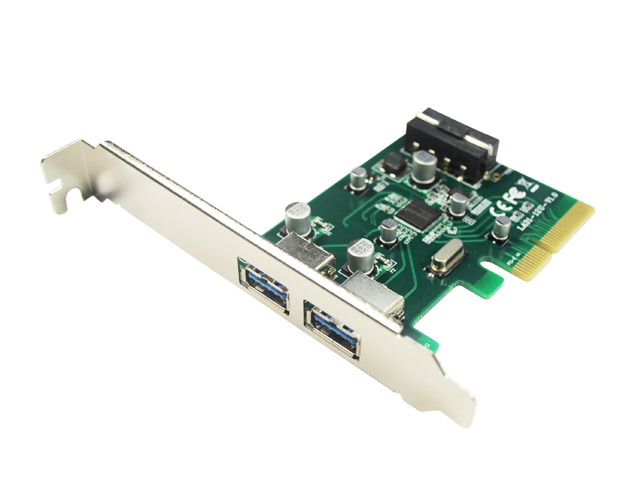
• 1 × PCIe to 4 Ports USB3.2 Gen2 Type-A Card
• 1 × User Manual
• 1 × Low Profile Bracket
❓How does this card compare to the builtin USB 3.1 10G ports on a computer motherboard? Will it be more stable than the native USB 3.0 ports on the PC?
✅ It will be more stable than the motherboard's built-in USB ports because most onboard USB ports are routed through the chipset (Southbridge). This card connects directly to the CPU via a dedicated PCIe slot with an independent USB controller, bypassing the chipset for lower latency and higher efficiency.
❓Can it power external devices? What’s the maximum power output per port?
✅ Yes, it can power external devices when the 15-pin SATA power connector (top-right of the card) is connected. Each port provides a maximum output of 5V 2A.
❓Can this card work without connecting the SATA power cable?
✅ Theoretically, yes if you only need USB data transfer and the connected device has its own power supply, the card can operate without the SATA power cable.
❓Does it require drivers on Windows? Which systems are supported?
✅ It supports plug-and-play (driver-free) operation on Windows 10 and Windows 11.
For Linux, it’s plug-and-play on kernel versions 2.6.31 and above.
❓What’s the bandwidth per port?
✅ Each port delivers 10Gbps bandwidth.
❓Is this card compatible with industrial cameras? Will it provide stable performance?
✅ PCIe USB cards offer greater stability than motherboard USB ports, making them ideal for high-speed, stability-dependent devices like industrial cameras.